
The protesting students claimed that when they reached Red Fort, police did not allow them to take out the march but they did not budge and said they would make their voices heard.

'But he was very quick and did a very stylish adab.' 'Of course, I didn't expect him to hug.'
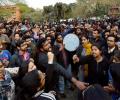
The State is trying to curb the students movements, therefore, there are suspicions against some of the Subramanian report on education's recommendations, says Mohammad Sajjad.

186,267 Indian students were studying in the US in 2016-2017.

India will grow at around 7.4 per cent in 2022-23 and continue at the same pace in the next year as well, Union Finance Minister Nirmala Sitharaman said on Friday. Sitharaman said there are risks on the external front and this is not the right time to throw caution to the wind, and also assured exporters of all the necessary support from the government as they face the headwinds. Speaking at the FE Best Bank Awards event here, Sitharaman said global agencies like IMF and the World Bank have taken cognisance of the strengths of the Indian economy by saying that it will be among the fastest growing ones in the next two years.
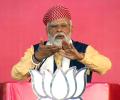
Modi's BJP has promised more revdis or freebies for these assembly elections than ever before, points out N Sathiya Moorthy.
The amount of money lying unclaimed with the Life Insurance Corporation of India dwarfs the budgets of many ministries. There was Rs 21,539.5 crore which lay unclaimed with India's largest insurance company, according to details in the initial public offer (IPO) document it filed over the weekend. The regulatory documentation is ahead of LIC selling shares to the public through the stock exchange for the first time this financial year. This will be India's largest ever public listing.

'Once our voices are crushed, they can bring in an agenda of privatisation.'

In the June quarter of FY24, 51 per cent of consumers who took small-ticket personal loans already had more than four credit products at the time of accessing yet another new loan, compared with just 17 per cent in the June quarter of FY20, points out Tamal Bandyopadhyay.

Why are the poor turning Right instead of turning toward far-Left parties, ponders Pranab Bardhan.

The Ambedkar-Periyar Study Circle explains their side of the story which saw the IIT-Madras student body being de-recognized for violation of code of conduct and misuse of privileges.
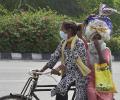
About 56 million Indians may have plunged into extreme poverty in 2020 as a result of the pandemic, increasing the global tally by 71 million and making it the worst year for poverty reduction since World War II, according to fresh estimates by the World Bank. "The global goal of ending extreme poverty by 2030 is likely to be missed: By then, about 600 million people will remain in abject poverty. A major course correction is needed," Indermit Gill, chief economist at the World Bank, tweeted. The World Bank in its latest "Poverty and Shared Prosperity" made fresh estimates of poverty using a new extreme poverty line based on the purchasing power parity (PPP) of $2.15, the earlier one being at $1.9.

In his final address, the president said that the soul of India resided in "pluralism and tolerance.

Physicist Kanwal Singh appointed dean of Sarah lawrence College, the first Indian American to head a leading liberal arts college in the US.
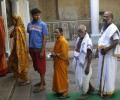
The new government has to make conscious efforts to rebuild social equality and bring the people together.

The Congress, desperate to make a comeback in Gujarat, which has been ruled by the Bharatiya Janata Party for over 20 years, has tried to reach out to various sections of society in its blueprint unveiled.
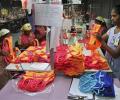
Reasons include include dropping out of education, raising children and family pressure

Stock market investors are expecting a balanced Budget with a focus on job creation, increased spending on infrastructure, reigning in the deficit, and bringing the economy back on track, experts said on Wednesday. Stock markets have been subdued in the run-up to the Union Budget with BSE's benchmark Sensex is almost flat so far this month. Even the corporate earning season failed to excite the markets, while some indices like IT and bankex have seen some positive movements.

One solution to India's challenges of education, employment, employability lies in state governments adopting apprenticeships on a large scale.
The overall rank has been propped by the third criteria of innovation and sophistication, which have ranks of 59 and 57 respectively.

Cloned journals have become more rampant in the post-pandemic world.

The government must undo the damage inflicted by the flawed policies of globalisation, and India should be converted into a country where entrepreneurs can thrive and the entire population can participate in the economy, says Arvind Kumar.

Snooping is one of the oldest peccadilloes of man, observes Ambassador M K Bhadrakumar.

Ajit Balakrishnan offers a thinking man's guide to the angst of the professions.

How should one billion Indians, for whom deprivation has become an inescapable way of life, join us in celebrating 75 years of Independence? And where do we go from here? asks Kalyan Singhal.

No longer Bengal's finance minister, Amit Mitra, Mamata's principal chief advisor, will still advise and aid the 'chief minister and finance department on all matters relating to management of state finance', represent the 'state government in national and international events/meetings/committees' and examine 'important proposals/files and policy issues relating to financial matters referred to him for advice/views'.

The Supreme Court has refused to interfere with the government and RBI's loan moratorium policy, and declined to extend the six-month loan moratorium period.
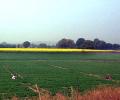
Be it loan waiver or DBT transfer, it only helps in creating a "feel good" factor and postpones the problem for some time if structural problems are not handled.
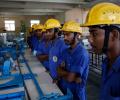
The shortage of skilled workers in India is one of the country's biggest challenges.

Kickstarting its interactive sessions to connect with the masses and woo voters ahead of Delhi assembly polls, the Aam Aadmi Party on Saturday launched a five-point programme for youth, guaranteeing higher education by setting up 20 new colleges and having Wi-Fi connectivity across Delhi.

The recent report in the New York Times that China had brought India's financial capital - Mumbai - to a halt by hacking the electricity supply grid has not come as a surprise to the CTOs (chief technology officers) and cyber security experts. Indian companies, including critical infrastructure providers such as power grids, ports and radar systems, lack the IT infrastructure to prevent hacking from hostile state actors like China and North Korea, warn security experts. Recently, the United States government warned of yet another breach of critical systems tied to Microsoft Exchange email systems that the company has blamed on China. The breach has impacted thousands of organisations in the US and its impact on India is still unknown.

Free provision of food, cash transfers, and jobs in villages see enhanced flow of funds despite a precipitous fall in revenue. Till May, defence spend was nearly 30 per cent less than the previous year.

'What is unusual about the current period of slow growth is that it has come without an external driver -- high oil prices and/or successive monsoon failures -- as was the case with all previous periods of slowdown, going back 50 years, notes T N Ninan.

'The Budget has maintained fiscal prudence while announcing a number of steps to boost growth, particularly in infrastructure and rural sectors.'

Believe it or not, the regulator is even stretching its arm to identify stressed borrowers and gauge the 'distance to default' as a measure of a particular bank's fragility, reveals Tamal Bandyopadhyay.

'The uneducated think of their rights as a gift. This is deeply troubling.' 'If they were educated they could claim what is rightfully theirs.'
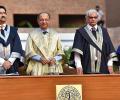
'What is forgotten but is actually as important for a society's long run success is morality.' 'Morals and trust are the nuts and bolts of an economy.' 'Without those you can get short run success, but not long-run development.'

Is it a divine, sacrosanct university, a holy cow, prohibiting human intervention?

...and getting GDP to measure India's data economy, recommends Ajit Balakrishnan.

India will welcome two trade missions in 2015 focused on meeting its infrastructure needs with US technology and services.
